Read Time: 4 minutes
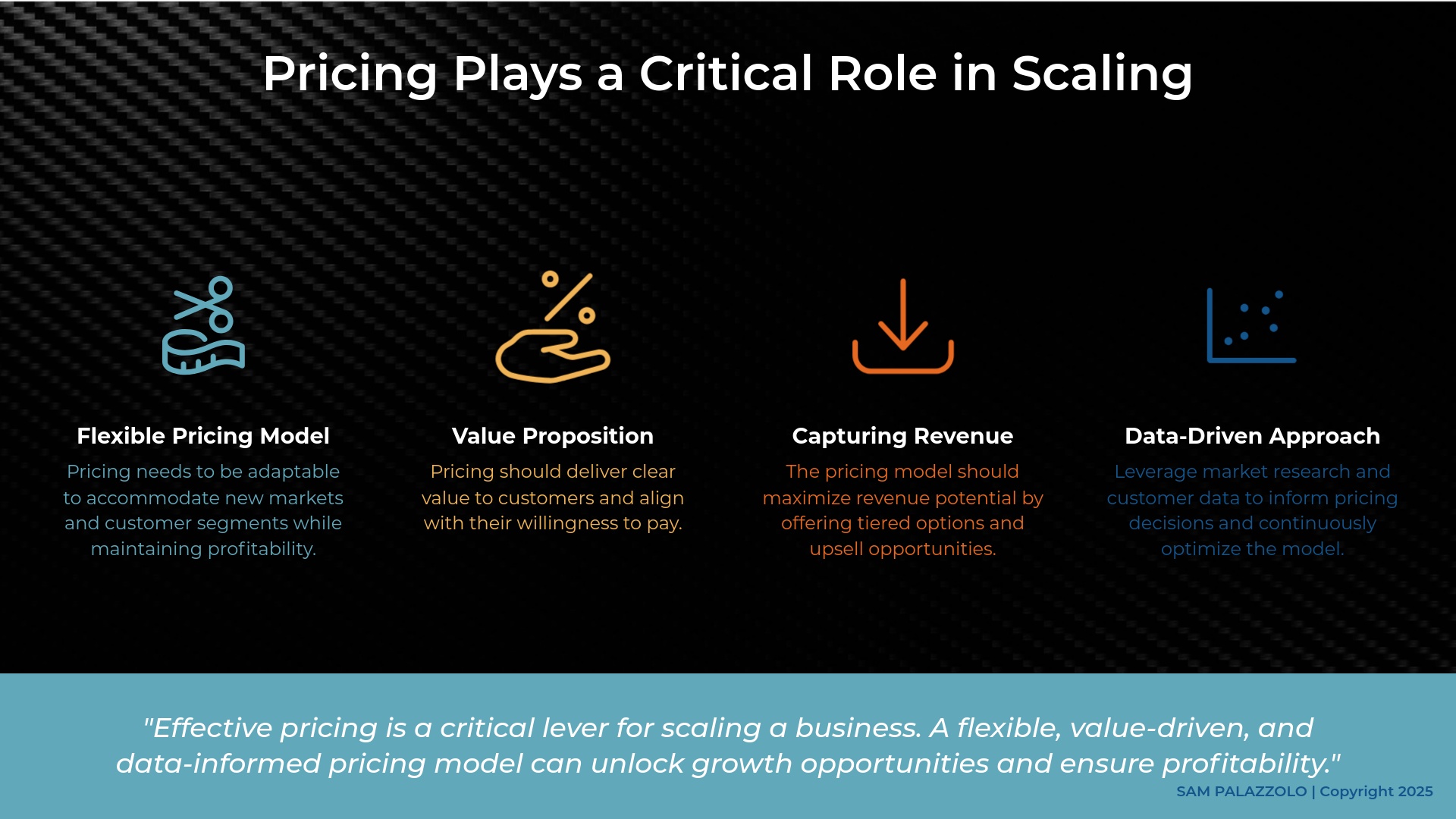
According to McKinsey... Your Pricing Strategy Can 2-4X Your Profits Right Now!
When was the last time you seriously revisited your Pricing Strategy? Not just a quick check, but a real, strategic review—because if you’re not optimizing pricing at least once a year, you’re leaving serious money on the table.
Here’s something most business leaders don’t realize: Pricing has 2-4x more impact on profitability than increasing sales volume. (McKinsey) At Deloitte, I led Pricing Strategy for Fortune 500s, and I saw one common mistake: Most businesses either underprice out of fear or overcomplicate things until customers freeze and do nothing... This shouldn't happen, so let's get into it!
Your Pricing Strategy - Here’s How to Optimize
Your Pricing Strategy is most likely already in place, so the next step is testing and refining it for maximum profitability. Here are my favorite four pricing models I use to optimize revenue:
1️⃣ Psychological Pricing – Small tweaks, big impact. Ending prices in .99 (charm pricing) or structuring prices to create a "decoy effect" (positioning a mid-tier option as the "Best" deal) influences customer decisions.
🔹 Example: Economist.com famously tested offering online subscriptions at $59, print-only at $125, and a print + digital bundle at $125. The bundle drastically increased conversions.
2️⃣ Dynamic Pricing – Used by airlines, ride-sharing apps, and even e-commerce stores, dynamic pricing adjusts in real time based on demand, competitor prices, and customer behavior.
🔹 Example: Amazon reprices millions of products daily (hourly?) based on demand signals.
3️⃣ Value-Based Pricing – Pricing based on perceived customer value, rather than cost. This requires understanding what drives customers to buy and what pain points they’re willing to pay more to solve.
🔹 Example: B2B SaaS companies price their tiers based on outcomes (e.g., increased sales, time savings).
4️⃣ Subscription & Usage-Based Pricing – Moves revenue from one-off transactions to predictable, recurring revenue streams.
🔹 Example: Adobe switched from one-time software purchases to subscription-based Creative Cloud—resulting in record revenue and customer retention.
The Simple Pricing Strategy You Shouldn’t Ignore
If you don’t already have a structured pricing model in place, Good-Better-Best (G-B-B) Pricing is where I recommend you start. It’s simple, effective, and ensures you’re not forcing a "one-size-fits-all" approach on your customers.
Here’s how it works:
✅ Good: The basic version—covers essentials, gets the job done.
✅ Better: More features, better results—priced at a comfortable premium.
✅ Best: Premium everything—top-tier features, priority support, full-service experience.
So why does this G-B-B work? Because it puts the decision-making power in your customer’s hands while anchoring value. If you’re only offering one price point, you’re missing out on what’s really driving purchasing behavior.
How to Apply This Scaling Strategy Today!
1️⃣ Audit your current pricing model. Is it attracting the right customers? Is it leaving money on the table?
2️⃣ Test small changes. Adjust price anchoring, introduce a middle-tier option, or A/B test discount structures.
3️⃣ Use customer data. Pricing isn’t a gut-feel decision—use buying patterns and customer feedback to refine your approach.
4️⃣ Follow a structured review cadence.
How Often Should You Revisit Pricing Strategy?
At minimum, I recommend conducting a structured Pricing Strategy Review every 6-12 months. Why? Because:
📉 Market conditions shift – Competitor moves, inflation, supply chain issues, or customer demand can change price sensitivity.
📊 Customer behavior evolves – Willingness to pay, preferred purchasing models (subscriptions vs. one-time), and perceived value fluctuate.
💰 Profitability insights emerge – Are certain segments underpriced? Are discounts eroding margins? Are customers opting for mid-tier rather than premium?
Instead of treating pricing as a one-time decision, treat it like an iterative strategy—adjusting as your market, customers, and competitive landscape shift.
✅ Quarterly Check-Ins: Monitor pricing performance—conversion rates, customer churn, and profitability margins.
✅ Biannual Adjustments: Test small tweaks, such as A/B testing different pricing structures or value messaging.
✅ Annual Overhaul: Assess if your pricing still aligns with market positioning, customer expectations, and revenue goals.
Real-World Example
A subscription SaaS company I worked with was stuck at a $99/month flat fee for all. After implementing a G-B-B pricing strategy ($49, $99, and $249 tiers), they saw conversions increase by 37% and average revenue per customer jump by 52%—all without adding new features or changing their marketing spend. You're welcome!
Real Strategies. Real Results.
No pricing model is perfect out of the gate—it needs continuous refinement to match your market, customer psychology, and competitive landscape. Whether you're optimizing G-B-B pricing or exploring dynamic or value-based models, the key is testing, tracking, and adjusting.
If you want to take a deeper dive into refining your pricing for growth, let’s talk. Reply back or grab a time on my calendar.
That's it for this week...
Sam Palazzolo
PS - The next cohort of my CEO Catalyst program launches on Thursday, March 20th. If you are a CEO looking to lead yourself, lead your team, and scale your business this is for you (and if you're a leader whose title isn't CEO, but you're looking to achieve the CEO-mindset/skillset, this is for you too!) Find out more here: https://www.sampalazzolo.com/ceo-catalyst






Responses